

Other
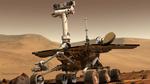
“One of the most successful and enduring feats of interplanetary exploration, NASA’s Opportunity rover mission is at an end after almost 15 years exploring the surface of Mars and helping lay the groundwork for NASA’s return to the …

“Earth’s northern magnetic pole is moving quickly away from the Canadian Arctic toward Siberia. This movement has forced NCEI’s scientists to update the World Magnetic Model (WMM) mid-cycle. Typically, a new and updated version of the WMM is …
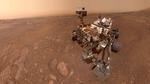
“NASA’s Curiosity rover has taken its last selfie on Vera Rubin Ridge and descended toward a clay region of Mount Sharp. The twisting ridge on Mars has been the rover’s home for more than a year, providing scientists …
“NASA’s Opportunity rover begins its 16th year on the surface of Mars today. The rover landed in a region of the Red Planet called Meridiani Planum on Jan. 24, 2004, sending its first signal back to Earth from the …
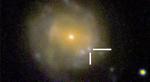
“A brief and unusual flash spotted in the night sky on June 16, 2018, puzzled astronomers and astrophysicists across the globe. The event - called AT2018cow and nicknamed “the Cow” after the coincidental final letters in its official name - is unlike …
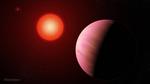
“Using data from NASA’s Kepler space telescope, citizen scientists have discovered a planet roughly twice the size of Earth located within its star’s habitable zone, the range of orbital distances where liquid water may exist on the planet …
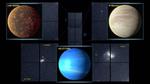
“NASA’s Transiting Exoplanet Survey Satellite (TESS) has found three confirmed exoplanets, or worlds beyond our solar system, in its first three months of observations. The mission’s sensitive cameras also captured 100 short-lived changes — most of them likely stellar …
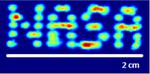
“NASA and the Sunnyvale, California-based AOSense, Inc., have successfully built and demonstrated a prototype quantum sensor capable of obtaining highly sensitive and accurate gravity measurements — a stepping stone toward next-generation geodesy, hydrology, and climate-monitoring missions in space. The prototype sensor …
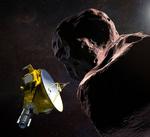
“Scientists at last have their first good look at a primordial piece of the solar system orbiting more than four billion miles away. On the final evening of 2018, the biggest New Year’s Eve party in the solar system …
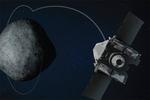
“At 2:43 p.m. EST on December 31, while many on Earth prepared to welcome the New Year, NASA’s OSIRIS-REx spacecraft, 70 million miles (110 million kilometers) away, carried out a single, eight-second burn of its thrusters …