

Other
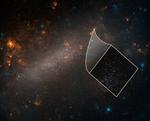
“Astronomers using NASA’s Hubble Space Telescope say they have crossed an important threshold in revealing a discrepancy between the two key techniques for measuring the universe’s expansion rate. The recent study strengthens the case that new theories may …
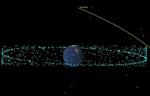
“On April 13, 2029, a speck of light will streak across the sky, getting brighter and faster. At one point it will travel more than the width of the full Moon within a minute and it will get as bright …
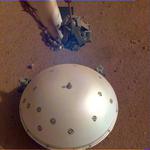
“NASA’s Mars InSight lander has measured and recorded for the first time ever a likely “marsquake.” The faint seismic signal, detected by the lander’s Seismic Experiment for Interior Structure (SEIS) instrument, was recorded on April 6, the lander …
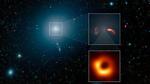
“On April 10, 2019, the Event Horizon Telescope (EHT) unveiled the first-ever image of a black hole’s event horizon, the area beyond which light cannot escape the immense gravity of the black hole. That giant black hole, with a …
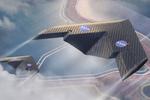
“Assembled from tiny identical pieces, the wing could enable lighter, more energy-efficient aircraft designs. A team of engineers has built and tested a radically new kind of airplane wing, assembled from hundreds of tiny identical pieces. The wing can change …
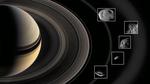
“New findings have emerged about five tiny moons nestled in and near Saturn’s rings. The closest-ever flybys by NASA’s Cassini spacecraft reveal that the surfaces of these unusual moons are covered with material from the planet’s rings …
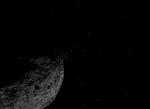
“A NASA spacecraft that will return a sample of a near-Earth asteroid named Bennu to Earth in 2023 made the first-ever close-up observations of particle plumes erupting from an asteroid’s surface. Bennu also revealed itself to be more rugged …

“A NASA technologist is taking miniaturization to the extreme. Mahmooda Sultana won funding to advance a potentially revolutionary, nanomaterial-based detector platform. The technology is capable of sensing everything from minute concentrations of gases and vapor, atmospheric pressure and temperature, and …
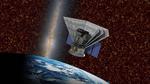
“NASA has selected a new space mission that will help astronomers understand both how our universe evolved and how common are the ingredients for life in our galaxy’s planetary systems. The Spectro-Photometer for the History of the Universe, Epoch …
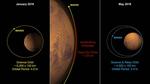
“NASA’s 4-year-old atmosphere-sniffing Mars Atmosphere and Volatile Evolution (MAVEN) mission is embarking on a new campaign today to tighten its orbit around Mars. The operation will reduce the highest point of the MAVEN spacecraft’s elliptical orbit from 3 …