

Other

“University of Wisconsin-Madison engineers have added a new dimension to our understanding of why straining a particular group of materials, called Ruddlesden-Popper oxides, tampers with their superconducting properties. The findings, published in the journal Nature Communications, could help pave the …

“Perovskite particles could improve the performance of solar cells and light-emitting diodes via a simple process to stabilize the nanocrystal surface. A method for chemically stabilizing optical nanocrystals, without degrading their electrical properties, has been developed by scientists at KAUST …

“Yale’s latest work expanding the reach of quantum information science is actually a game of quantum pitch and catch. In a new study published April 23 in the journal Nature Physics, Yale researchers “pitch” a qubit — a tiny bit …
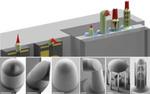
“At Karlsruhe Institute of Technology (KIT), researchers have developed a flexible and efficient concept to combine optical components in compact systems. They use a high-resolution 3D printing process to produce tiny beam-shaping elements directly on optical microchips or fibers and …

“Nearly 20 years ago, researchers conducting experiments on Lawrence Livermore National Laboratory’s (LLNL) Nova Petawatt laser system — the world’s first quadrillion-watt laser — discovered that when the system’s intense short-pulse laser beams struck a thin foil target, an …

“A study published in Science reports on how ICFO researchers, with MIT and Univ. of Minho, are able to confine and guide light down to a space of 1-atom thick in dimension. All electronic devices in our daily lives - computers …
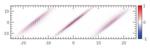
“An exact mathematical solution reveals how to tilt a laser pulse and move intensity peaks at faster than the speed of light, or even backwards A breakthrough in the mathematical solution for manipulating pulses of light clarifies the physics of …

“The pull-up, an exercise dreaded by most, answers a basic question: are your muscles strong enough to lift your own body weight? Some Illinois researchers working on artificial muscles are seeing results even the fittest individuals would envy, designing muscles …
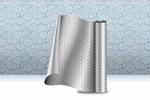
“Scalable manufacturing process spools out strips of graphene for use in ultrathin membranes. MIT engineers have developed a continuous manufacturing process that produces long strips of high-quality graphene. The team’s results are the first demonstration of an industrial, scalable …

“Technique would allow addition of optical communication components to existing chips with little modification of their designs. Two and a half years ago, a team of researchers led by groups at MIT, the University of California at Berkeley, and Boston …