

Other

“Ultrathin films curve up into long, light and cost-effective heat-harvesting tubes for high-power generation. A system that can recycle excess heat into electricity could help meet the increasing energy demands of a growing global population. KAUST researchers have now engineered …
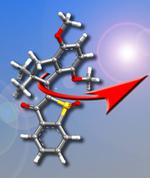
“With the help of ultrafast spectroscopy and quantum mechanical calculations, LMU researchers have characterized the complete rotational cycle of the light-driven, chemical motor molecule hemithioindigo. Chemist Dr. Henry Dube, heading an Emmy Noether Junior Research Group, has developed a molecular …
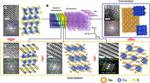
“A KAIST research team recently developed sodium ion batteries using copper sulfide anode. This finding will contribute to advancing the commercialization of sodium ion batteries (SIBs) and reducing the production cost of any electronic products with batteries. Professor Jong Min …
“A KAIST research team developed a technology to increase the stability of amine-containing adsorbents by fifty times, moving one step further toward commercializing stable adsorbents that last longer. Professor Minkee Choi from the Department of Chemical and Biomolecular Engineering and …

“Physicists at the Laboratory for Attosecond Physics, which is jointly run by Ludwig-Maximilians-Universität and the Max Planck Institute of Quantum Optics, have developed a high-power laser system that generates ultrashort pulses of light covering a large share of the mid-infrared …
“An international team of scientists has demonstrated a breakthrough in the design and function of nanoparticles that could make solar panels more efficient by converting light usually missed by solar cells into usable energy. The team, led by scientists at …
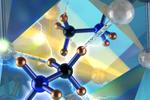
“Neutron scattering has revealed, in real time, the fundamental mechanisms behind the conversion of sunlight into energy in hybrid perovskite materials. A better understanding of this behavior will enable manufacturers to design solar cells with increased efficiency. The multi-institutional team …

“Physicists at the University of Warwick have published new research in the Journal Science (today 19th April 2018 - via the journal’s First Release pages) that could literally squeeze more power out of solar cells by physically deforming each of …
“A team led by Rice University scientists used a unique combination of techniques to observe, for the first time, a condensed matter phenomenon about which others have only speculated. The research could aid in the development of quantum computers. The …

“International project led by Duke University engineers receives $6 million from Army Research Office An international team of researchers led by Duke University has received more than $9 million to investigate the potential advantages of using a “spectator qubit” to …