

Other
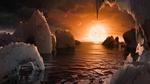
“NASA’s Spitzer Space Telescope has revealed the first known system of seven Earth-size planets around a single star. Three of these planets are firmly located in the habitable zone, the area around the parent star where a rocky planet …
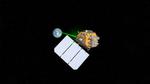
“Thought your Internet speeds were slow? Try being a space scientist for a day. The vast distances involved will throttle data rates to a trickle. You’re lucky if a spacecraft can send more than a few megabits per second …
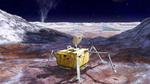
“In early 2016, in response to a congressional directive, NASA’s Planetary Science Division began a pre-Phase A study to assess the science value and engineering design of a future Europa lander mission. NASA routinely conducts such studies — known as …
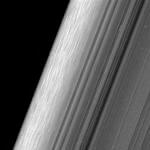
“Newly released images showcase the incredible closeness with which NASA’s Cassini spacecraft, now in its “Ring-Grazing” orbits phase, is observing Saturn’s dazzling rings of icy debris. The views are some of the closest-ever images of the outer parts …

“When astronauts set foot on Mars, they may stay for months rather than days as they did during Apollo missions to the moon. The surface of Mars has extreme temperatures and the atmosphere does not provide adequate protection from high-energy …
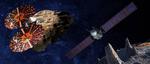
“NASA has selected two missions that have the potential to open new windows on one of the earliest eras in the history of our solar system – a time less than 10 million years after the birth of our sun. The …
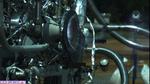
“Recent tests of a developmental rocket engine at NASA’s Marshall Space Flight Center in Huntsville, Alabama, produced all the performance data engineers were hoping for, along with the traditional fire and roar. But this engine is anything but traditional …
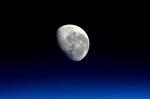
“Step outside on October 16, and take a look at the moon. Not only will the moon be full, but on that day, the moon will be at its closest point to our planet as it orbits Earth. This makes …
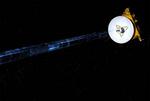
“Having traveled from the New Horizons spacecraft over 3.4 billion miles, or 5.5 billion kilometers (five hours, eight minutes at light speed), the final item – a segment of a Pluto-Charon observation sequence taken by the Ralph/LEISA imager …
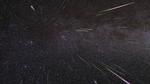
“Make plans now to stay up late or set the alarm early next week to see a cosmic display of “shooting stars” light up the night sky. Known for it’s fast and bright meteors, the annual Perseid meteor shower …