

Other
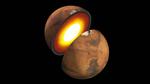
“Starting next year, scientists will get their first look deep below the surface of Mars. That’s when NASA will send the first robotic lander dedicated to exploring the planet’s subsurface. InSight, which stands for Interior Exploration using Seismic …
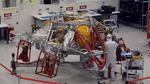
“NASA’s Mars 2020 mission has begun the assembly, test and launch operations (ATLO) phase of its development, on track for a July 2020 launch to Mars. The first planned ATLO activities will involve electrical integration of flight hardware into …

“Data collected by NASA’s Juno mission to Jupiter indicate that the atmospheric winds of the gas-giant planet run deep into its atmosphere and last longer than similar atmospheric processes found here on Earth. The findings will improve understanding of …
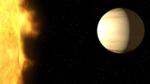
“Much like detectives who study fingerprints to identify the culprit, scientists used NASA’s Hubble and Spitzer space telescopes to find the “fingerprints” of water in the atmosphere of a hot, bloated, Saturn-mass exoplanet some 700 light-years away. And, they …

“You’ve heard of NASA’s X1 robotic exoskeleton, right? It’s the robot a human can wear over his or her body to either assist or inhibit movement in leg joints. Well, now NASA’s Wearable Robotics Laboratory, in …
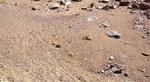
“NASA’s Mars Exploration Rover Opportunity keeps providing surprises about the Red Planet, most recently with observations of possible “rock stripes.” The ground texture seen in recent images from the rover resembles a smudged version of very distinctive stone stripes …
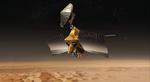
“NASA’s Mars Reconnaissance Orbiter (MRO) has begun extra stargazing to help the space agency accomplish advances in Mars exploration over the next decade. The spacecraft already has worked more than double its planned mission life since launch in 2005 …
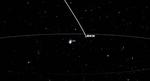
“Two small asteroids recently discovered by astronomers at the NASA-funded Catalina Sky Survey (CSS) near Tucson, Arizona, are safely passing by Earth within one lunar distance this week. The first of this week’s close-approaching asteroids — discovered by CSS …
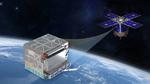
“In deep space, accurate timekeeping is vital to navigation, but many spacecraft lack precise timepieces on board. For 20 years, NASA’s Jet Propulsion Laboratory in Pasadena, California, has been perfecting a clock. It’s not a wristwatch; not something …
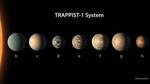
“The seven Earth-size planets of TRAPPIST-1 are all mostly made of rock, with some having the potential to hold more water than Earth, according to a new study published in the journal Astronomy and Astrophysics. The planets’ densities, now …