


Other

“Most development work on self-driving cars focuses on mundane things like getting around parked cars and keeping bugs off sensors, but what about speed? Roborace is trying to develop a racing series for autonomous cars, and has set a Guinness …
“A promising semiconductor material could be improved if flaws previously thought irrelevant to performance are reduced, according to research published today in Nature Communications. A group of researchers at Rensselaer Polytechnic Institute and other universities has shown that a specific …
“In power electronics, semiconductors are based on the element silicon – but the energy efficiency of silicon carbide would be much higher. Physicists of the University of Basel, the Paul Scherrer Institute and ABB explain what exactly is preventing the use …
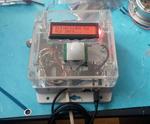
“Once I was given the task to look for an environmental probe for monitoring the temperature in the server room of my company. My first idea was: why not just use a Raspberry PI and a DHT sensor, it can …
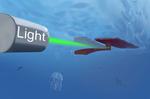
“In a paper in Science Robotics, materials scientists from the UCLA Samueli School of Engineering describe a new design for a swimming robot that’s both powered and steered by constant light. The device, called OsciBot because it moves by …
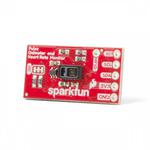
“Introduction The SparkFun Pulse Oximeter and Heart Rate Monitor is an I²C based biometric sensor. Utilizing two chips from Maxim Integrated, the SparkFun Pulse Oximeter and Heart Rate Monitor has both the MAX30101 biometric sensor and MAX32664 biometric hub. While …
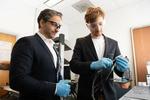
“The growing popularity of lithium-ion batteries in recent years has put a strain on the world’s supply of cobalt and nickel – two metals integral to current battery designs – and sent prices surging. In a bid to develop alternative designs …
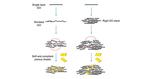
“Want to make a super strong material from nano-scale building blocks? Start with the highest quality building blocks, right? Wrong — at least when working with “flakes” of graphene oxide (GO). A new study from Northwestern University researchers shows that better …
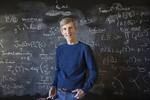
“Mathematics researcher Drew Sutherland helps solve decades-old sum-of-three-cubes puzzle, with help from “The Hitchhiker’s Guide to the Galaxy.” A team led by Andrew Sutherland of MIT and Andrew Booker of Bristol University has solved the final piece of a …
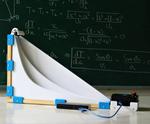
“The brachistochrone curve is a classic physics problem, that derives the fastest path between two points A and B which are at different elevations. Although this problem might seem simple it offers a counter-intuitive result and thus is fascinating to …