

Other

“Computers can beat chess champions, simulate star explosions, and forecast global climate. We are even teaching them to be infallible problem-solvers and fast learners. And now, physicists at the Department of Energy’s Lawrence Berkeley National Laboratory (Berkeley Lab) and …
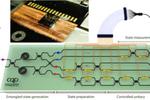
“An international collaboration of quantum physicists from the University of Bristol, Microsoft, Google, Imperial College, Max Planck Institute, and the Sun Yat-sen University have introduced a new algorithm to solve the energy structure of quantum systems on quantum computers. They …
“Researchers at the University of Alabama at Birmingham have developed a novel method to better protect Crypto Phones from eavesdropping and other forms of man-in-the-middle attacks. Crypto Phones consist of smartphone apps, mobile devices, personal computer or web-based Voice over …
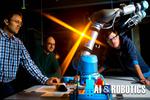
“While drones and driverless cars dominate the headlines, another breakthrough—robot dexterity—is likely to have an even greater impact in both business and everyday life. “Robot manipulation is the next shoe to drop,” says Robert Platt, computer science professor …
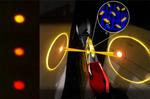
“A new way of modifying the dipole moment of cholesteric liquid crystals allows for researchers to select between the different band-edge modes experimentally for the first time. Since lasers were first developed, the demand for more adaptable lasers has only …
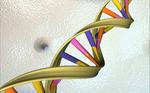
“A new nanopore technology for direct sequencing of long strands of DNA has resulted in the most complete human genome ever assembled with a single technology, scientists have revealed. The research, published today in Nature Biotechnology, involved scientists from the …
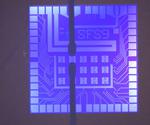
“Researchers at the National Institute of Standards and Technology (NIST) have built a superconducting switch that “learns” like a biological system and could connect processors and store memories in future computers operating like the human brain. The NIST switch, described …
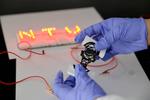
“Scientists at Nanyang Technological University, Singapore (NTU Singapore) have created a customizable, fabric-like power source that can be cut, folded or stretched without losing its function. Led by Professor Chen Xiaodong, Associate Chair (Faculty) at the School of Materials Science …
News Scientists to showcase new technology standard that could shape the future of electronics design
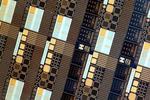
“Researchers from Electronics and Computer Science at the University of Southampton have discovered a way of enhancing the capabilities of an emerging nanotechnology that could open the door to a new generation of electronics. This memristor technology will be showcased …
“Platform connects individual pieces of lab equipment, compiles data in the cloud for speedier, more accurate research. Although Internet-connected “smart” devices have in recent years penetrated numerous industries and private homes, the technological phenomenon has left the research lab largely …