

Other

“Special-purpose chip reduces power consumption of public-key encryption by 99.75 percent, increases speed 500-fold. Most sensitive web transactions are protected by public-key cryptography, a type of encryption that lets computers share information securely without first agreeing on a secret …

“The quest for Olympic gold is the search for the slightest leg up — small changes that could ultimately shave fractions of a second off of one’s time. It’s an ideal platform for a technology like 3D printing, where …

“Quantum computing is heralded for its potential to tackle problems that today’s conventional computers can’t handle. Scientists and industries are looking to quantum computing to speed advancements in areas like chemistry or drug development, financial modeling, and even …
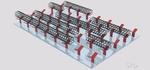
“Two Waterloo chemists have made it easier for manufacturers to produce a new class of faster and cheaper semiconductors. The chemists have found a way to simultaneously control the orientation and select the size of single-walled carbon nanotubes deposited on …
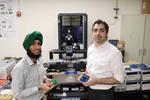
“A device that’s turned off doesn’t suck battery life, but it also doesn’t work. Now a low-power system that’s always on the alert can turn devices on when they are needed, saving energy in the networked …

“Surgeons in the UK are using Microsoft’s mixed-reality headset to “see inside” patients before they operate on them. A team at Imperial College London are wearing HoloLens devices in operating theatres so they can spot key blood vessels, bones …
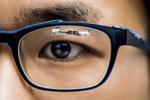
“University of Washington engineers have turned tissue paper – similar to toilet tissue – into a new kind of wearable sensor that can detect a pulse, a blink of an eye and other human movement. The sensor is light, flexible and inexpensive …

“We’re all connected — and not just in a yogic sense. By 2022, there will be 29 billion connected devices across the globe, according to a forecast from the June 2017 Ericsson mobility report. All of these devices will want …

“A team of researchers at UC San Diego and San Diego State University has developed a pair of “4-D goggles” that allows wearers to be physically “touched” by a movie when they see a looming object on the screen, such …
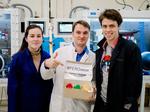
“Young scientists from ITMO University have developed a new type of nanoscale light sources based on halide perovskites. The nanosources are subwavelength nanoparticles which serve both as emitters and nanoantennas capable of amplifying light emission inherently without need for additional …