

Other
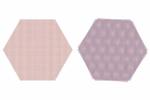
“When rotated at a “magic angle,” graphene sheets can form an insulator or a superconductor. It’s hard to believe that a single material can be described by as many superlatives as graphene can. Since its discovery in 2004, scientists …
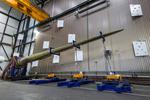
“The share of the overall electricity market made up by wind energy continues to grow year after year. The giant rotor blades are one central part of a turbine. In the “SmartBlades” project, the Fraunhofer Institute for Wind Energy Systems …
“Researchers from the University of Illinois at Chicago and Lawrence Berkeley National Laboratory have developed a new technique that lets them pinpoint the location of chemical reactions happening inside lithium-ion batteries in three dimensions at the nanoscale level. Their results …

“Data collected by NASA’s Juno mission to Jupiter indicate that the atmospheric winds of the gas-giant planet run deep into its atmosphere and last longer than similar atmospheric processes found here on Earth. The findings will improve understanding of …
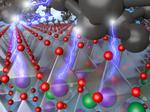
“ICN2 researchers have developed a novel concept in transistor technology: a two-in-one power source plus transistor device that runs on solar energy. Published in Advanced Functional Materials and currently trending in the Wiley-VCH “Hot Topics” list, lead author Amador …
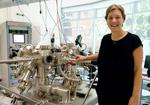
“The unique Australian approach of creating quantum bits from precisely positioned individual atoms in silicon is reaping major rewards, with two of these atom qubits made to “talk” to each other for the first time. The unique Australian approach of …

“SpaceX has launched its 50th Falcon 9 rocket mission, and on board is its largest ever geostationary satellite payload, a Hispasat unit that’s around the size of a city bus. The launch took off from Cape Canaveral in Florida …
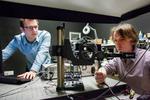
“Someday your self-driving car could react to hazards before you even see them, thanks to a laser-based imaging technology being developed by Stanford researchers that can peek around corners. A driverless car is making its way through a winding neighborhood …
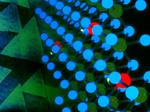
“A new understanding of why synthetic 2-D materials often perform orders of magnitude worse than predicted was reached by teams of researchers led by Penn State. They searched for ways to improve these materials’ performance in future electronics, photonics, and …
“Case Western Reserve researchers reveal how anatomically distinct microcircuit brain networks suppress each other, compete and collaborate Researchers at Case Western Reserve University have found a previously unseen pattern among the rapid-firing neurons inside the brain, one that reveals how …