

Other
“A team of material researchers from Jülich, Munich, and Prague has succeeded in producing a composite material that is particularly suited for electrodes in lithium batteries. The nanocomposite material might help to significantly increase the storage capacity and lifetime of …
News Ultra high-speed IC capable of wireless transmission of 100 gigabits per second in a 300 GHz band
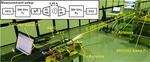
“Technology expected to pioneer utilization of unexplored terahertz wave frequencies Nippon Telegraph and Telephone Corporation (NTT; head office: Chiyoda-ku, Tokyo; president & CEO: Hiroo Unoura), and Tokyo Institute of Technology (Tokyo Tech; head office: Meguro-ku, Tokyo; president: Kazuya Masu), have jointly …
“Physicists dream of having a rich supply of ultracold molecules with specific electronic properties. A dense gas of such particles would have exciting applications in tests of fundamental physics, quantum-controlled chemistry and the study of many-body systems. Researchers at the …
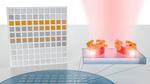
“Infrared spectroscopy is the benchmark method for detecting and analyzing organic compounds. But it requires complicated procedures and large, expensive instruments, making device miniaturization challenging and hindering its use for some industrial and medical applications and for data collection out …

“A new microscopy technique developed at RMIT allows researchers to see more of what’s happening inside cells. The new “bleaching-assisted multichannel microscopy” (BAMM) technique improves the quantity of information captured in fluorescence microscopy. This will allow researchers to better …
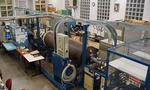
“The use of particle accelerators is not confined to basic research in high-energy physics. Large-scale accelerators and gigantic devices, such as the Large Hadron Collider (LHC), are used for this purpose, but relatively small accelerators are used in medicine (diagnostic …

“Scientists use molecular dipoles to accelerate electron transfer in one direction and completely suppress it in the other. This “holy grail” of energy science could hasten the design of new and superb energy and electronic materials. Researchers at the University …

“Intel researchers are taking new steps toward quantum computers by testing a tiny new “spin qubit” chip. The new chip was created in Intel’s D1D Fab in Oregon using the same silicon manufacturing techniques that the company has perfected …
“A KAIST research team has proposed a perovskite material, Cs2Au2I6 that serves as a potential active material for highly efficient lead-free thin-film photovoltaic devices. This material is expected to lay the foundation to overcome previously known limitations of perovskite including …

“A new Ford Transit Connect self-driving research vehicle features three lockers - one on the passenger side and two in the back - that help deliver both food and goods Ford is working with Postmates - which offers on-demand delivery from restaurants and …