

Other
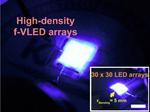
“A KAIST research team developed a crucial source technology that will advance the commercialization of micro LEDs. Professor Keon Jae Lee from the Department of Materials Science and Engineering and his team have developed a low cost production technology for …
“Design can “learn” to identify plugged-in appliances, distinguish dangerous electrical spikes from benign ones. Have you ever plugged in a vacuum cleaner, only to have it turn off without warning before the job is done? Or perhaps your desk lamp …

“3GPP TSG #80 Plenary Meeting has approved the completion of the standalone (SA) Release 15 5G specifications. After the release of the 5G NR specifications for non-standalone (NSA) operation in Dec. 2017, another essential step of standardization of 5G has …
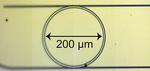
“Every time we send an e-mail, a tweet, or stream a video, we rely on laser light to transfer digital information over a complex network of optical fibers. Dozens of high-performance lasers are needed to fill up the bandwidth and …

“We must reduce the environmental and health risks of pesticides. However, rather than banning them completely, Robert Finger advocates an intelligent approach to crop protection. Glyphosate, neonicotinoids, drinking water initiative – renouncing pesticides is currently the subject of fierce discussion. For …
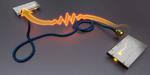
“In the new quantum information technologies, fragile quantum states have to be transferred between distant quantum bits. Researchers at ETH have now realized such a quantum transmission between two solid-state qubits at the push of a button. Data transmission is …
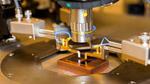
“Carbon nanotubes – cylindrical formations of carbon atoms with incredible strength and electrical conductivity – hold great promise for creating new micron-scale low-power electronic devices. But finding a way to build a reliable computing platform based on the carbon material has been …
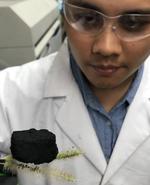
“Rice lab creates conductive 3D carbon blocks that can be shaped for applications Rice University scientists have developed a simple way to produce conductive, three-dimensional objects made of graphene foam. The squishy solids look and feel something like a child …
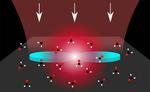
“Ultra-confined light could detect harmful molecules Sciences (SEAS) have developed a new technique to squeeze infrared light into ultra-confined spaces, generating an intense, nanoscale antenna that could be used to detect single biomolecules. The researchers harnessed the power of polaritons …
“As the demand for smartphones, electric vehicles, and renewable energy continues to rise, scientists are searching for ways to improve lithium-ion batteries—the most common type of battery found in home electronics and a promising solution for grid-scale energy storage …