

Other
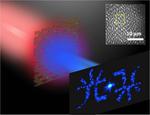
“Missouri S&T researchers are demonstrating a new concept to reconstruct holographic images by using a single two-dimensional material monolayer with the thickness of less than one nanometer. Their work could lead to the creation of smart watches with holographic …
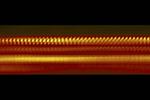
“Atomically thin materials developed by Stanford researchers could create heat-shields for cell phones or laptops that would protect people and temperature-sensitive components and make future electronic gadgets even more compact. Excess heat given off by smartphones, laptops and other electronic …
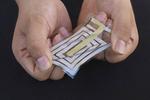
“Stanford engineers have developed experimental stickers that pick up physiological signals emanating from the skin, then wirelessly beam these health readings to a receiver clipped onto clothing. It’s all part of a system called BodyNet. We tend to take …
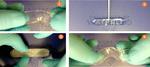
“A new material created at the University of Waterloo can switch back and forth between a hard solid or a soft gel at the same temperature, a breakthrough that offers an innovative solution to a long-standing challenge with synthetic materials …

“Creating animations for robotic characters is very challenging due to the constraints imposed by their physical nature. In particular, the combination of fast motions and unavoidable structural deformations leads to mechanical oscillations that negatively affect their performances. Our goal is …
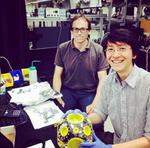
“MIT researchers have developed a new technique to reveal the uncharted dynamics of electrons in materials. A new technique developed by a team at MIT can map the complete electronic band structure of materials at high resolution. This capability is …
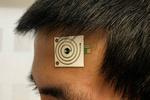
“Needle pricks not your thing? A team of scientists at the University of California, Berkeley, is developing wearable skin sensors that can detect what’s in your sweat. They hope that one day, monitoring perspiration could bypass the need for …

“Scientists at EPFL have developed a tiny pump that could play a big role in the development of autonomous soft robots, lightweight exoskeletons and smart clothing. Flexible, silent and weighing only one gram, it is poised to replace the rigid …

“If contemplating the vast size of astronomical objects makes you feel rather puny and insignificant, then this new discovery will make you feel positively infinitesimal. It’s almost impossible to imagine an object this large: a super massive black hole …

“Overuse of electronic devices is no “LOL” — laughing out loud — matter, according to researchers, who suggest that excessive interaction with e-devices may be related to weaker activity in areas of the brain that are key to understanding scientific texts. In …