

Other
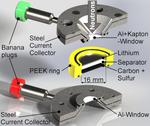
“An HZB team has for the first time precisely analysed how nanoparticles of lithium sulphide and sulphur precipitate onto battery electrodes during the course of the charging cycle. The results can help increase the service life of lithium-sulphur batteries. Lithium-sulphur …

“Researchers at KU Leuven and imec have successfully developed a new technique to insulate microchips. The technique uses metal-organic frameworks, a new type of materials consisting of structured nanopores. In the long term, this method can be used for the …
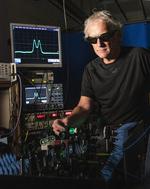
“Researchers at the National Institute of Standards and Technology (NIST) have demonstrated a new type of sensor that uses atoms to receive commonly used communications signals. This atom-based receiver has the potential to be smaller and work better in noisy …
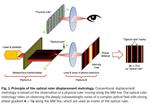
“Scientists at Nanyang Technological University, Singapore (NTU Singapore) have developed a new way to measure distances at the nanoscale – one nanometre being one billionth of a metre – using light. Devices that use light to see objects, such as microscopes, have …
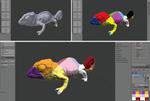
“Computer Science and Artificial Intelligence Laboratory team creates new reprogrammable ink that lets objects change colors using light. The color-changing capabilities of chameleons have long bewildered willing observers. The philosopher Aristotle himself was long mystified by these adaptive creatures. But …
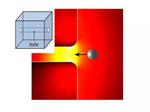
“Scientists of Tomsk Polytechnic University jointly with Russian and international colleagues developed the concept for constructing an “optical vacuum cleaner”. Due to its optical properties, it can trap nanoparticles from the environment. Currently, there are no effective devices for this …
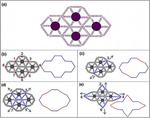
“Medical implants of the future may feature reconfigurable electronic platforms that can morph in shape and size dynamically as bodies change or transform to relocate from one area to monitor another within our bodies. In Applied Physics Letters, from AIP …

“Most development work on self-driving cars focuses on mundane things like getting around parked cars and keeping bugs off sensors, but what about speed? Roborace is trying to develop a racing series for autonomous cars, and has set a Guinness …
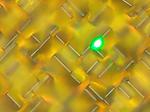
“A promising semiconductor material could be improved if flaws previously thought irrelevant to performance are reduced, according to research published today in Nature Communications. A group of researchers at Rensselaer Polytechnic Institute and other universities has shown that a specific …
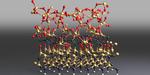
“In power electronics, semiconductors are based on the element silicon – but the energy efficiency of silicon carbide would be much higher. Physicists of the University of Basel, the Paul Scherrer Institute and ABB explain what exactly is preventing the use …