

Other

“Stanford researchers designed a tactile display that aims to make 3D printing and computer-aided design accessible to people who are blind and visually impaired. With the goal of increasing access to making, engineers at Stanford University have collaborated with members …

“Stretchy, see-through, silver nanowire sheet combines optical transparency with excellent electrical conductivity. A submicrometer-thin mesh of silver nanowires—that is transparent to light, highly electrically conductive, flexible and stretchable, and simple to make—has been developed by researchers at KAUST …
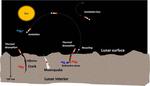
“Planetary scientists prefer to call the thin gaseous envelope around the Moon as the ‘Lunar exosphere’ since it is so tenuous that the gas atoms very rarely collide with each other. While the Earth’s atmosphere near the mean sea …

“By sensing tiny changes in shadows, a new system identifies approaching objects that may cause a collision. To improve the safety of autonomous systems, MIT engineers have developed a system that can sense tiny changes in shadows on the ground …
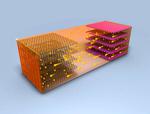
“Electric vehicle owners may soon be able to pull into a fueling station, plug their car in, go to the restroom, get a cup of coffee and in 10 minutes, drive out with a fully charged battery, according to a …

“Scientists synthesized light with new intrinsic chirality to tell mirror molecules apart Light is the fastest way to distinguish right- and left-handed chiral molecules, which has important applications in chemistry and biology. However, ordinary light only weakly senses molecular handedness …

“A technology that has enabled ever-faster delivery of voice and data over the Internet and other telecommunications platforms could play a front-and-center role in NASA’s quest to develop a super-small instrument for gathering unprecedented details about extraterrestrial planets, moons …
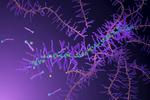
“Materials could be useful for delivering drugs or imaging agents in the body; may offer alternative to some industrial plastics. MIT chemists have devised a way to synthesize polymers that can break down more readily in the body and in …
News Physicists make one step toward using insulating antiferromagnetic materials in future computers

“Physicists at Mainz University and cooperation partners observe reading and writing of digital information with antiferromagnetic materials Future computer technology based on insulating antiferromagnets is progressing. Electrically insulating antiferromagnets such as iron oxide and nickel oxide consist of microscopic magnets …

“New inexpensive, scalable design takes advantage of the optical switchability of porous polymers; could be used for heating, cooling, and lighting buildings, as well as camouflage applications Buildings devote more than 30% of their energy use to heating, cooling, and …