

Other
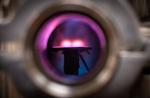
“Computers, mobile phones and all other electronic devices contain thousands of transistors, linked together by thin films of metal. Scientists at LiU have developed a method that can use the electrons in a plasma to produce these films. The processors …

“For the first time, labs around the world can 3D print their own precision microscopes, thanks to an open-source design created at Bath. For the first time, labs around the world can 3D print their own precision microscopes to analyse …

“First high-intensity, low-voltage red LEDs made from nitride semiconductors. Making pure red LEDs from nitride crystals is a goal that has so far frustrated engineers. However, these LEDs are vital for building the next generation of energy-efficient micro-LED displays …
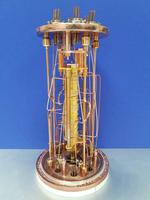
“Measuring tiny differences in mass between different quantum states provides new insights into heavy atoms A new door to the quantum world has been opened: when an atom absorbs or releases energy via the quantum leap of an electron, it …
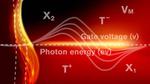
“When something just works, that’s usually a good thing. But for scientists and engineers, when something works and they don’t understand the mechanism behind it, it raises enough questions to keep them up at night. Cun-Zheng Ning, a …
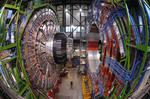
“The huge detectors providing a window to the world’s tiniest particles are set for a $153 million upgrade, and a team of Purdue University scientists will play a key role — continuing the university’s decades-long legacy with the historic …
News Small Optical Link for International Space Station (SOLISS) Succeeds in Bidirectional Laser Communication Between Space and Ground Station

“The Japan Aerospace Exploration Agency (JAXA, President: Hiroshi Yamakawa), the National Institute of Information and Communications Technology (NICT, President: Hideyuki Tokuda) and Sony Computer Science Laboratories, Inc. (Sony CSL, President and CEO: Hiroaki Kitano) announced today that they were successful …
News Stanford researchers one step closer toward enabling electric cars to recharge themselves wirelessly as they drive

“Engineers have demonstrated a practical way to use magnetism to transmit electricity wirelessly to recharge electric cars, robots or even drones. The technology could be scaled up to power electric cars as they drive over highways, robots on factory floors …

“SpaceX is launching Starlink to provide high-speed, low-latency broadband connectivity across the globe, including to locations where internet has traditionally been too expensive, unreliable, or entirely unavailable. We also firmly believe in the importance of a natural night sky for …
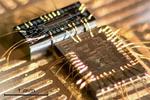
“New filter chips created by Penn engineers could enable high-quality lasers at a fraction of their current size and cost. Many emerging technologies rely on high-quality lasers. Laser-based LiDAR sensors can provide highly accurate scans of three-dimensional spaces, and as …