

Other
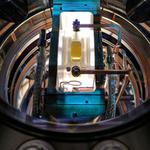
“Understanding hardware errors helps stabilise quantum tech PhD candidate Riddhi Gupta has taken an algorithm used in autonomous vehicles and adapted it to help characterise and stabilise quantum technology. Scientists at the University of Sydney have adapted techniques from autonomous …
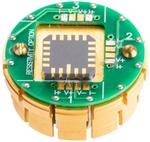
“First isolated in 2004 by physicists at the University of Manchester using pieces of sticky tape and a graphite block, the one-atom-thick carbon allotrope graphene has been touted as a wonder material on account of its exceptional electrical, thermal and …
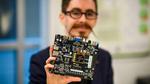
“Computers are renowned for flexibility, running everything from game consoles to stock exchanges. But at the level of computation, most computers rely on arrays of identical processors called cores. Now, a team at Princeton University has built a hardware platform …

“Researchers have presented a novel electrode material for advanced energy storage device that is directly charged with oxygen from the air. Professor Jeung Ku Kang’s team synthesized and preserved the sub-nanometric particles of atomic cluster sizes at high mass …

“Our researchers have helped to find a way of measuring neutron lifetime from space for the first time. The discovery could teach us more about the early universe as knowing the lifetime of neutrons is key to understanding the formation …
“During metal processing in the 3D laser printer, temperatures of more than 2,500 degrees Celsius are reached within milliseconds, causing some components of the alloys to evaporate. While widely considered a problem inherent to the process, Empa researchers spotted …
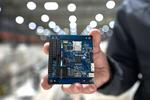
“The first artificial intelligence to be carried onboard a European Earth observation mission will be launched this week from Europe’s spaceport in Kourou, French Guiana. The pioneering artificial intelligence technology named ɸ-sat-1, pronounced PhiSat-1, will be the first experiment …

“ew research on the two-dimensional (2D) material graphene has allowed researchers to create smart adaptive clothing which can lower the body temperature of the wearer in hot climates. A team of scientists from The University of Manchester’s National Graphene …
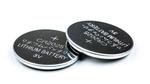
“Graphene doped with sodium can be a key player in making cheap batteries and spintronic devices, EPFL scientists discover. “Lithium is becoming a critical material as it is used extensively in cell-phones and car batteries, while, in principle, sodium could …
“An international team led by scientists at the Hong Kong University of Science and Technology (HKUST) has recently developed the world’s first 3D artificial eye with capabilities better than existing bionic eyes and in some cases, even exceed those …