

Other
News Toshiba and Japan Semiconductor Develop Technology to Improve Reliability of Pch-LDMOS for Analog ICs
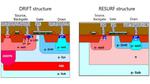
“Toshiba Electronic Devices & Storage Corporation (“Toshiba”) and its manufacturing subsidiary, Japan Semiconductor Corporation, have developed technology to improve the reliability of P-channel Laterally Double Diffused MOS (Pch-LDMOS) technology for analog ICs. The companies clarified the cause of degradation of …
“How do you keep the world’s tiniest soda cold? UCLA scientists may have the answer. A team led by UCLA physics professor Chris Regan has succeeded in creating thermoelectric coolers that are only 100 nanometers thick — roughly one ten-millionth …

“Physicists from Lancaster University have established why objects moving through superfluid helium-3 lack a speed limit in a continuation of earlier Lancaster research. Helium-3 is a rare isotope of helium, in which one neutron is missing. It becomes superfluid at …

“New research from Chalmers, together with ETH Zürich, Switzerland, suggests a promising way to detect elusive dark matter particles through previously unexplored atomic responses occurring in the detector material. The new calculations enable theorists to make detailed predictions about the …
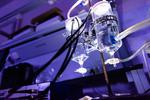
“Scientists from NUST MISIS have developed a new type of energy-efficient devices — thermocells that convert heat into energy. This will make possible creation of portable batteries that can be applied to virtually any surface, including clothing, to generate electricity directly …
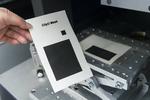
“Face masks have become an important tool in fighting against the COVID-19 pandemic. However, improper use or disposal of masks may lead to “secondary transmission”. A research team from City University of Hong Kong (CityU) has successfully produced graphene …
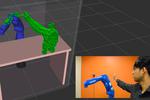
“Realtime Robotics has created a controller that helps robots safely move around on the fly. George Konidaris still remembers his disheartening introduction to robotics. “When you’re a young student and you want to program a robot, the first thing …

“Researchers at The Australian National University (ANU) have developed a new way to create an almost perfect hologram in near darkness. Optical holograms are a clever way of producing a 3D image of an object. They have a number of …

“EPFL physicists propose a new path to detect infrared radiation with outstanding sensitivity, allowing detection of signals as low as that of a single quantum of light. When using our webcam or cell phone camera, we experience the tremendous capabilities …
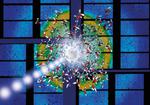
“Using the X-ray laser European XFEL, a research team has investigated how water heats up under extreme conditions. In the process, the scientists were able to observe water that remained liquid even at temperatures of more than 170 degrees Celsius …