

Other

“Space debris threatens human safety in space and puts at risk critical space-based infrastructure that supports services such as the internet, global navigation and climate monitoring. A new project from the EPFL International Risk Governance Center (IRGC), in collaboration with …
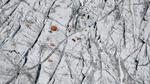
“Scientists have used fibre-optic sensing to obtain the most detailed measurements of ice properties ever taken on the Greenland Ice Sheet. Their findings will be used to make more accurate models of the future movement of the world’s second-largest …

“The UCF-developed propulsion system could allow for flight speeds of Mach 6 to 17 (more than 4,600 to 13,000 miles per hour) and would have applications in air and space travel. University of Central Florida researchers are …
“Researchers at Graphene Flagship Partners the University of Cambridge, UK, Ecole Polytechnique Fédérale de Lausanne (EPFL), Switzerland, Empa-Swiss Federal Laboratories for Material Science and Technology, Switzerland and Graphene Flagship Associate Member the University of Exeter, UK, in collaboration with colleagues …
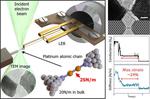
“Scientists develop a method to visualize monoatomic chains and measure the strength and conductance of single-atom bonds Low-dimensional materials, such as 1D monoatomic chains, exhibit exotic properties that could find interesting applications. However, single-atom bonds and their mechanical characteristics are …
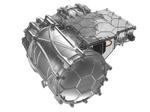
“MAHLE is currently developing a new kind of magnet-free electric motor that does not require rare earth elements. This not only makes production more environmentally compatible, but also brings advantages in terms of costs and resource security. The central feature …
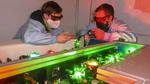
“Researchers from Friedrich Schiller University Jena, the University of California Berkeley and the Institut Polytechnique de Paris use intense laser light in the extreme ultraviolet spectrum to generate a non-linear optical process on a laboratory scale – a process which until …
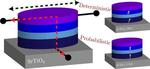
“Classic computers use binary values (0/1) to perform. By contrast, our brain cells can use more values to operate, making them more energy-efficient than computers. This is why scientists are interested in neuromorphic (brain-like) computing. Physicists from the University …
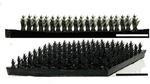
“Micro-engineered, bioinspired design allows the material to collect moisture from cool fog as well as generating and collecting steam under sun Tiny structures inspired by the shape of cactus spines allow a newly created material to gather drinkable water from …
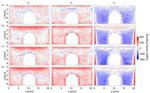
“For destressing printed metal parts, ‘island scanning’ may not be the cure-all after all. A research team has found that a method commonly used to skirt one of metal 3D printing’s biggest problems may be far from a silver …