

Other
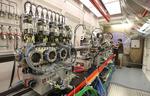
“In 2019, a Russian federal program for the development of synchrotron and neutron-focused research was launched. The program will go on until 2027; in that time, new megascience-class projects, such as X-ray lasers, synchrotrons, and neutron generators, are expected to …
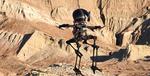
“LEO carves out a new type of locomotion somewhere between walking and flying Researchers at Caltech have built a bipedal robot that combines walking with flying to create a new type of locomotion, making it exceptionally nimble and capable of …
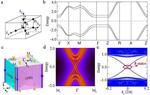
“New classifications have implications for quantum applications Humans have been aware of the strange phenomenon of magnetism for over 2,000 years. From ancient Greece through modern times, researchers have steadily improved upon humanity’s fundamental understanding of magnets. For …
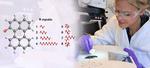
“Researchers at Chalmers University of Technology, Sweden, have succeeded in creating a new type of super-stable, durable glass with potential applications ranging from medicines, advanced digital screens, and solar cell technology. The study shows how mixing multiple molecules – up to …

“A team including UMD astronomers found a Jupiter-like planet orbiting a white dwarf star Astronomers have discovered the first confirmed planetary system that offers a glimpse into the fate of our solar system about five billion years into the future …
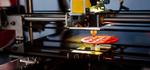
“A new chemical process for additive manufacturing suggests exciting possibilities for 4D printed components – such as properties that change over time. Researchers at Loughborough University have developed a hybrid method called Material Treatment Extrusion Additive Manufacturing (MaTrEx-AM), which uses …
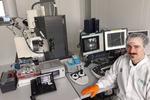
“Using a completely new synthesis approach, nanostructures made of aluminium single crystals and the semiconductor germanium are explored at TU Wien for future quantum technologies. A novel electronic component from TU Wien (Vienna) could be an important key to the …
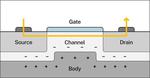
“Researchers at the National Institute of Standards and Technology (NIST) and collaborators have devised and tested a new, highly sensitive method of detecting and counting defects in transistors — a matter of urgent concern to the semiconductor industry as it develops …
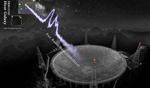
“An international research team led by Prof. LI Di and Dr. WANG Pei from National Astronomical Observatories of Chinese Academy of Sciences (NAOC) caught an extreme episode of cosmic explosions from Fast Radio Burst (FRB) 121102, using the Five-hundred-meter Aperture …
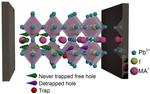
“An international team at HZB and Charles University Prague has investigated how charge carriers in so called MAPI-perovskite semiconductors interact with different defects. They show that a large proportion of defects quickly releases trapped charge carriers. These results could …