

Other
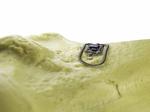
“Engineers and physicians teamed up to develop a wireless device to monitor and protect bone health. A team of University of Arizona researchers has developed an ultra-thin wireless device that grows to the surface of bone and could someday help …

“Rice lab finds 2D perovskite compound has the right stuff to challenge bulkier products Rice University engineers have achieved a new benchmark in the design of atomically thin solar cells made of semiconducting perovskites, boosting their efficiency while retaining their …
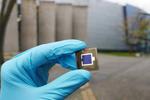
“Three HZB teams led by Prof. Christiane Becker, Prof. Bernd Stannowski and Prof. Steve Albrecht have jointly managed to increase the efficiency of perovskite silicon tandem solar cells fabricated completely at HZB to a new record value of 29.80 …
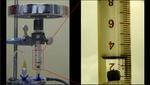
“International research team led by Kiel develops a new method for the generation of controllable electrical explosions. Theoretically, it only takes less than 450 grams of this material to lift an elephant: “Aerographene” owes this ability to its unique structure …

” Analog Devices, Inc. (ADI) today announced the MAX17330 battery management integrated circuit (IC) with integrated fuel gauge and advanced battery protection for one-cell lithium-ion/polymer batteries that delivers longer battery runtime for consumer applications than similar products. The new IC …
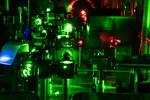
“The unusual nuclear physics phenomenon, first discovered at CERN’s ISOLDE facility 50 years ago, had until now been seen only in mercury isotopes. Alternating from spheres to rugby balls is no longer the sole preserve of mercury isotopes, an …

“A team of researchers led by Professor Christine Muschik from Physics and Astronomy performed the first-ever simulation of baryons—fundamental quantum particles—on a quantum computer. With their results, the team has taken a step towards more complex quantum simulations …
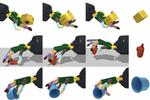
“Model-free framework reorients over 2,000 diverse objects with a hand facing both upward and downward, in a step toward more human-like manipulation. At just one year old, a baby is more dexterous than a robot. Sure, machines can do …

“Professor Bilge Yildiz finds patterns in the behavior of ions across applications. Bilge Yildiz’s research impacts a wide range of technologies. The members of her lab study fuel cells, which convert hydrogen and oxygen into electricity (and water). They …

“JILA researchers have tricked nature by tuning a dense quantum gas of atoms to make a congested “Fermi sea,” thus keeping atoms in a high-energy state, or excited, for about 10% longer than usual by delaying their normal return to …