

Other

“The new qubits stay in “superposition” for up to 10 seconds, and could make a promising foundation for quantum computers. MIT physicists have discovered a new quantum bit, or “qubit,” in the form of vibrating pairs of atoms known as …
“MIT neuroscientists have developed a computer model that can answer that question as well as the human brain. The human brain is finely tuned not only to recognize particular sounds, but also to determine which direction they came from. By …
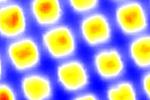
“Advancement in single-atom layer graphene coatings improves accelerator electron source lifespans. Protective coatings are common for many things in daily life that see a lot of use: we coat wood floors with finish; apply Teflon to the paint on cars …
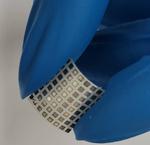
“Camels have a renowned ability to survive on little water. They are also adept at finding something to drink in the vast desert, using noses that are exquisite moisture detectors. In a new study in ACS Nano, researchers describe a …

“The Gouy-Chapman theory describes what happens near an electrode when it is in contact with a salt solution, but this description does not match reality. Researcher Kasinath Ojha, assistant professor Katharina Doblhoff-Dier and professor Marc Koper present a new version …

“Researchers at ETH Zurich and the Frankfurt School have developed an artificial neural network that can solve challenging control problems. The self-learning system can be used for the optimization of supply chains and production processes as well as for …
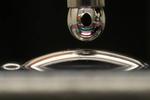
“Spread out or bead up? A new process enables control over liquid-solid interfaces even with the most unlikely pairs of materials. The wettability of a surface — whether drops of water or another liquid bead up or spread out when they …

“Robert O’Dea is a chemical engineering doctoral student working in the lab of Professor Thomas Epps and co-author on a new paper which looks at methods of repurposing lignin, the hardest-to-recycle part of trees, grasses and other biomass. UD …

“Advanced algorithms plus an exceptional X-ray laser can reveal the structures of not-so-neat-and-tidy materials unattainable by other techniques. Francis Crick, who famously co-discovered the shape of DNA, once said: “If you want to understand function, study structure.” Many decades later …
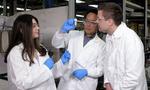
“Researchers have developed a smart and super-efficient new way of capturing carbon dioxide and converting it to solid carbon, to help advance the decarbonisation of heavy industries. The carbon dioxide utilisation technology from RMIT researchers is designed to be smoothly …