

Other
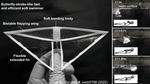
“Inspired by the biomechanics of the manta ray, researchers at North Carolina State University have developed an energy-efficient soft robot that can swim more than four times faster than previous swimming soft robots. The robots are called “butterfly bots,” because …

“Researchers discover an important clue as to what mechanism drives the solar wind Using observational data from the U.S. weather satellites GOES, a team of researchers led by the Max Planck Institute for Solar System Research (MPS) in Germany …
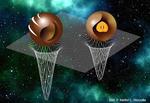
“Through extensive model calculations, physicists at Goethe University Frankfurt have reached general conclusions about the internal structure of neutron stars, where matter reaches enormous densities: depending on their mass, the stars can have a core that is either very stiff …
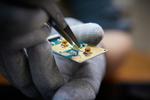
“Publication in Nature demonstrates promising method towards building the foundation for a future quantum computer. Scientists from QuTech and Eindhoven University of Technology have taken a next step in qubit research. Qubits are one of the building blocks of a …
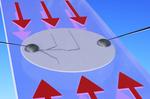
“Branchlike metallic filaments can sap the power of solid-state lithium batteries. A new study explains how they form and how to divert them. A discovery by MIT researchers could finally unlock the door to the design of a new kind …

“On Nov. 21, the University of Maine Advanced Structures and Composites Center (ASCC) unveiled BioHome3D, the first 3D-printed house made entirely with bio-based materials. BioHome3D was developed with funding from the U.S. Department of Energy’s Hub and Spoke …
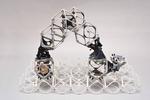
“Researchers make progress toward groups of robots that could build almost anything, including buildings, vehicles, and even bigger robots. Researchers at MIT have made significant steps toward creating robots that could practically and economically assemble nearly anything, including things much …
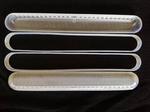
“Information gleaned from the optical analysis of diatom shells might one day improve a variety of light-based devices and components A new study has revealed how the glass-like shells of diatoms help these microscopic organisms perform photosynthesis in dim conditions …
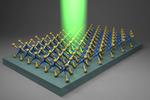
“A new technique that accurately measures how atom-thin materials expand when heated could help engineers develop faster, more powerful electronic devices. Two-dimensional materials, which consist of just a single layer of atoms, can be packed together more densely than conventional …

“Thanks to the James Webb Space Telescope, an international team including UNIGE scientists is building a complete picture of the atmosphere of the planet WASP-39b. The James Webb Space Telescope (JWST) and its unparalleled images of our Universe offer …