

Other
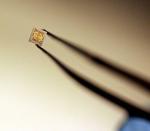
“Electromagnetic pulses lasting one millionth of a millionth of a second may hold the key to advances in medical imaging, communications and drug development. But the pulses, called terahertz waves, have long required elaborate and expensive equipment to use. Now …

“Venus is one of the most inhospitable places in the solar system. Descending through the clouds of boiling sulphuric rain is actually the easy bit—the hard bit is not being cremated by the surface temperature of 470°C (878 …
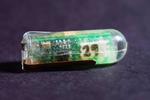
“Researchers at MIT and Brigham and Women’s Hospital have designed and demonstrated a small voltaic cell that is sustained by the acidic fluids in the stomach. The system can generate enough power to run small sensors or drug delivery …

“Nature does amazing things with limited design materials. Grass, for example, can support its own weight, resist strong wind loads, and recover after being compressed. The plant’s hardiness comes from a combination of its hollow, tubular macrostructure and porous …
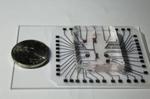
“Researchers at the Stanford University School of Medicine have developed a way to produce a cheap and reusable diagnostic “lab on a chip” with the help of an ordinary inkjet printer. At a production cost of as little as 1 …
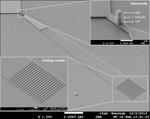
“With electrical cables reaching their limits, optical connections like fiberglass are increasingly becoming the standard for data traffic. Over longer distances almost all data transmission is optical. Within computer systems and microchips, too, the growth of data traffic is exponential …
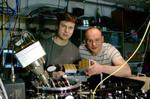
“An international team, led by a scientist from the University of Sussex, have today unveiled the first practical blueprint for how to build a quantum computer, the most powerful computer on Earth. This huge leap forward towards creating a universal …
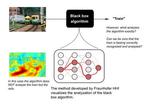
“Neural networks are commonly used today to analyze complex data – for instance to find clues to illnesses in genetic information. Ultimately, though, no one knows how these networks actually work exactly. That is why Fraunhofer researchers developed software that enables …
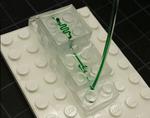
“LEGO already has millions of applications, building everything from castles to spaceships. But researchers in California have found a new use for the popular blocks – a modular microfluidics system. Microfluidics is a rapidly emerging technology with promising biomedical applications. It …
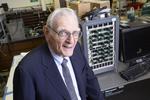
“A team of engineers led by 94-year-old John Goodenough, professor in the Cockrell School of Engineering at The University of Texas at Austin and co-inventor of the lithium-ion battery, has developed the first all-solid-state battery cells that could lead to …