

Other
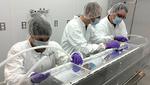
“A new study from the international Daya Bay neutrino experiment in China may have found an answer for why there appear to be fewer neutrinos from nuclear reactors than predicted in theoretical models. The next step will be for Yale …
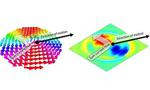
“Swirling objects known as magnetic vortices and skyrmions can be miniaturized without sacrificing mobility, a KAUST-led international research team has found. These findings are relevant for future “race-track” memory technologies that feature massive densities of moveable magnetic bits. In …

“It’s now nearly a year since DeepMind made the decision to switch the entire research organisation to using TensorFlow (TF). It’s proven to be a good choice - many of our models learn significantly faster, and the built-in features …
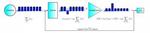
“Back in 1996, a computer scientist called Lov Grover at Bell Labs in New Jersey unveiled an unusual algorithm for searching through a database. Searching algorithms are among the most important in computer science. They make possible mundane tasks such …

“Flying from San Francisco to Los Angeles can be a huge pain in the ass. You can expect to spend over $200 on your plane ticket, plus another five hours of traveling door-to-door thanks to traffic, security, and other headaches …
“Intel is collaborating with Japan-based Preferred Networks Inc. (PFN) on the development of Chainer, PFN’s open source framework for deep learning, with the aim of accelerating deep learning performance on general purpose infrastructure powered by Intel. The advancement of …

“We’ve been using compute-intensive machine learning in our products for the past 15 years. We use it so much that we even designed an entirely new class of custom machine learning accelerator, the Tensor Processing Unit. Just how fast …
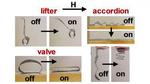
“A team of engineering researchers has made a fundamental advance in controlling so-called soft robots, using magnetic fields to remotely manipulate microparticle chains embedded in soft robotic devices. The researchers have already created several devices that make use of the …
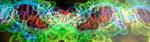
“Superimposing two lattices of similar periods creates structures that researchers can design to control and localize light. Brighter LEDs and more efficient solar cells are two potential applications for ASTAR’s research into lattice structures that can slow or …
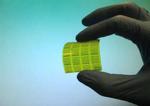
” Memory devices — as a subset of electronic functions that includes logic, sensors and displays — have undergone an exponential increase in integration and performance known as Moore’s Law. In parallel, our daily lives increasingly involve an assortment of relatively low-performance …