

Other

“The discovery of the Higgs boson at the Large Hadron Collider (LHC) in 2012 was a triumph of theoretical and experimental physics, yet its implications are only just beginning to be understood. Precise measurements by the ATLAS and CMS collaborations …

“In our daily lives, lithium-ion batteries have become indispensable. They function only because of a passivation layer that forms during their initial cycle. As researchers at Karlsruhe Institute of Technology (KIT) found out via simulations, this solid electrolyte interphase develops …
News By Cracking a Metal 3D-Printing Conundrum, Researchers Propel the Technology Toward Widespread Application
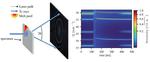
“Researchers have not yet gotten the additive manufacturing, or 3D printing, of metals down to a science completely. Gaps in our understanding of what happens within metal during the process have made results inconsistent. But a new breakthrough could grant …

“Concrete is the most used material in the construction industry and dates to the Roman Empire. Engineers at the University of Pittsburgh are now reimagining its design for the 21st century. New research introduces metamaterial concrete for the development of …
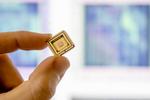
“Attackers have the ability not only to manipulate software, but also to tamper with the hardware. A team from Bochum is devising methods to detect such tampering. Security gaps exist not only in software, but also directly in hardware. Attackers …

“A research team from the University of Cologne (Germany) and the University of St Andrews (Scotland) has shown in a new study how a fundamental physical concept can be used to boost the colour brilliance of smartphone, computer or TV …

“Researchers at Yale have for the first time, using a process known as quantum error correction, substantially extended the lifetime of a quantum bit — a long-sought-after goal and one of the trickiest challenges in the field of quantum physics. Led …

“New imaging methods are being developed and adopted at a rapid pace in both research and industry. To equip EPFL graduates with the skills they’ll need, the School’s Center for Imaging is introducing a minor specifically in this …
News First AI-enhanced smart accelerometers from STMicroelectronics raise performance and efficiency for always-aware applications

“STMicroelectronics has launched three new accelerometers with advanced processing engines built-in to extend sensor autonomy, enabling systems to respond more quickly to external events while lowering power consumption. The LIS2DUX12 and LIS2DUXS12 leverage ST’s third-generation MEMS technology, adding programmable …

“An international team of scientists is developing an inkable nanomaterial that they say could one day become a spray-on electronic component for ultra-thin, lightweight and bendable displays and devices. The material, zinc oxide, could be incorporated into many components of …