

Other
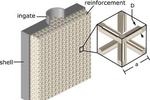
“A new manufacturing method created by Oak Ridge National Laboratory and Rice University combines 3D printing with traditional casting to produce damage-tolerant components composed of multiple materials. Composite components made by pouring an aluminum alloy over a printed steel lattice …
News ‘Near-zero-power’ temperature sensor could make wearables, smart home devices less power-hungry

“Electrical engineers at the University of California San Diego have developed a temperature sensor that runs on only 113 picowatts of power — 628 times lower power than the state of the art and about 10 billion times smaller than a …

“A team led by the Department of Energy’s Oak Ridge National Laboratory has used sophisticated neutron scattering techniques to detect an elusive quantum state known as the Higgs amplitude mode in a two-dimensional material. The Higgs amplitude mode is …

“When Cornell physicists Robert Richardson, David Lee and Douglas Osheroff received the 1996 Nobel Prize for their discovery of the superfluid state of liquid helium, it was only the beginning. Now a new team of Cornell researchers, building on that …
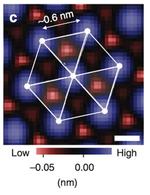
“Researchers at Tokyo Institute of Technology, Tohoku University and the University of Tokyo have applied advanced scanning methods to visualize the previously unexplored surface of a superconductor: lithium titanate (LiTi2O4). LiTi2O4 is the only known example of a so-called spinel1 …

“If you’ve ever applied for a loan or checked your credit score, algorithms have played a role in your life. These mathematical models allow computers to use data to predict many things — who is likely to pay back a …

“Early today, the World Wide Web Consortium (W3C) standards body publicly announced its intention to publish Encrypted Media Extensions (EME)—a DRM standard for web video—with no safeguards whatsoever for accessibility, security research or competition, despite an unprecedented internal …

“By utilizing terahertz waves in electronics, future data traffic can get a big boost forward. So far, the terahertz (THz) frequency has not been optimally applied to data transmission, but by using graphene, researchers at Chalmers University of Technology have …
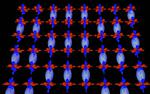
“Due to magnetism iron should - theoretically - be a poor superconductor. Nevertheless certain ironbased materials possess fine superconducting properties. Why? Because the five unbound electrons found in iron - as a result of individual modes of operation, it turns out - facilitate superconductivity …

“A Florida State University research team has discovered that light can significantly alter the structure of a promising material that scientists believe could make more efficient light-emitting diodes, lasers and other photon-based technologies. In the journal Angewandte Chemie International Edition …