

Other

“Some of the world’s tiniest crystals are known as “artificial atoms” because they can organize themselves into structures that look like molecules, including “superlattices” that are potential building blocks for novel materials. Now scientists from the Department of Energy …
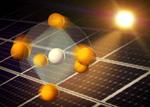
” In recent years, perovskites have taken the solar cell industry by storm. They are cheap, easy to produce and very flexible in their applications. Their efficiency at converting light into electricity has grown faster than that of any other material …
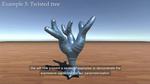
“Carnegie Mellon University researchers have found a way to design telescoping structures that can bend and twist, enabling robots of various shapes to collapse themselves for transport, enter tiny spaces and reach over or around large obstacles. The researchers devised …
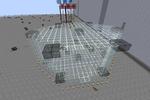
“Carnegie Mellon University engineering students are using the building blocks in a popular computer game to make materials. “When you make materials, it’s like building things,” said B. Reeja Jayan, an assistant professor of mechanical engineering. “Minecraft is the …

“Modern films and TV shows are filled with spectacular computer-generated sequences computed by rendering systems that simulate the flow of light in a three-dimensional scene and convert the information into a two-dimensional image. But computing the thousands of light rays …

“Lawrence Livermore National Laboratory (LLNL) scientists have developed a technique that helps extract hydrogen from water efficiently and cheaply. Hydrogen can be used as a clean fuel in fuel cells, which produce power, with water and heat as the only …

“Mixed Reality (MR) and Augmented Reality (AR) create exciting opportunities to engage users in immersive experiences, resulting in natural human-computer interaction. Many MR interactions are generated around a first-person Point of View (POV). In these cases, the user directs to …

“Most cameras just record colour but now the 3D shapes of objects, captured through only a single lens, can be accurately estimated using new software developed by UCL computer scientists. The method, published today at CVPR 2017, gives state-of-the-art results …

“Two Norwegian companies are taking the lead in the race to build the world’s first crewless, autonomously operated ship, an advance that could mark a turning point in seaborne trade. Dubbed by shipping executives the “Tesla of the Seas …
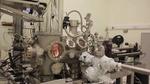
“A team of researchers from AMBER, the Science Foundation Ireland funded materials science centre based in Trinity College Dublin, have made a breakthrough in the area of material design – one that challenges the commonly held view on how the fundamental …