

Other
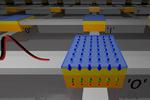
“Researchers at UC Berkeley and UC Riverside have developed a new, ultrafast method for electrically controlling magnetism in certain metals, a breakthrough that could lead to greatly increased performance and more energy-efficient computer memory and processing technologies. The findings of …

“An important aspect of pharmacology is understanding how active drug ingredients cross-react with endogenous molecules. But until now, such reactions could only be determined after the event. The precise details of the interacting factors remained unclear. Fraunhofer researchers have developed …

“Today it is already becoming apparent that the data rates offered by the coming 5G mobile communications standard will not sate private users’ and industry’s hunger for data for very long. That is why Fraunhofer experts are already working …

“A flexible detector for terahertz frequencies has been developed by Chalmers researchers using graphene transistors on plastic substrates. It is the first of its kind, and can extend the use of terahertz technology to applications that will require flexible electronics …

“A new type of smart fabric developed at the University of Washington could pave the way for jackets that store invisible passcodes and open the door to your apartment or office. The UW computer scientists have created fabrics and fashion …

“A team of physicists from Rostock University, the Max Born Institute in Berlin, the Ludwig-Maxmilians-Universität Munich, and the Max Planck Institute of Quantum Optics in Garching has now shown how electrons can be accelerated in an extreme and well-controlled way …

“The quest to develop ever-faster and more powerful computers has led to one of the most rudimentary methods of counting being given a 21st century make-over. An international team of researchers, including Professor C. David Wright from the University of …
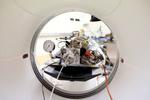
“As the world continues to burn 100 million barrels of oil a day – a rate that is expected to continue for the next 50 years – Stanford Earth researchers are developing greener ways of extracting the oil and mitigating the resulting …

“Life on Earth originated in an intimate partnership between the nucleic acids (genetic instructions for all organisms) and small proteins called peptides, according to two new papers from biochemists and biologists at the University of North Carolina at Chapel Hill …

“Scientists have discovered a pioneering new technique to transform ambient heat into motion in nanoscale devices - which could revolutionise future generations of data storage and sensors. The innovative new study by a team of international researchers including Professor Gino Hrkac …