

Other

“A discovery by an international team of researchers from Princeton University, the Georgia Institute of Technology and Humboldt University in Berlin points the way to more widespread use of an advanced technology generally known as organic electronics. The research, published …
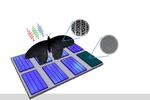
“Nanostructures Optimize Light Absorption in Black Butterflies – Principle Can Be Transferred to Photovoltaics for Improving Light Harvesting in Thin-Film Solar Cells – Cell Efficiency Increase Sunlight reflected by solar cells is lost as unused energy. The wings of the butterfly Pachliopta …
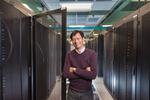
“A team of computer scientists and engineers from Sandia National Laboratories and Boston University recently received a prestigious award at the International Supercomputing conference for their paper on automatically diagnosing problems in supercomputers. The research, which is in the early …

“A SEK 1 billion research initiative is setting Sweden on course to a global top position in quantum technology. The focus is on developing a quantum computer with much greater computing power than the best supercomputers of today. The initiative …
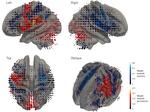
“Machine learning could improve our ability to determine whether a new drug works in the brain, potentially enabling researchers to detect drug effects that would be missed entirely by conventional statistical tests, finds a new UCL study published today in …

“A simple technique for mass producing ultrathin, high-quality molybdenum trioxide nanosheets could lead to next-generation electronic and optoelectronic devices Molybdenum trioxide (MoO3) has potential as an important two-dimensional (2D) material, but its bulk manufacture has lagged behind that of others …

“System with thousands of nodes brings affordable testbed to supercomputing system-software developers LOS ALAMOS, N.M., Nov. 13, 2017—A quest to help the systems software community work on very large supercomputers without having to actually test on them has …
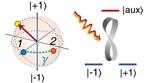
“Defect spins in diamond were controlled with a simpler, geometric method, leading to faster computing. Quantum computing could solve problems impossible for today’s supercomputers. The challenge for this new form of computing is processing the quantum bits (qubits) that …
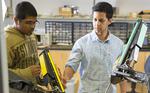
“Electrical engineers at the University of California San Diego have developed a faster collision detection algorithm that uses machine learning to help robots avoid moving objects and weave through complex, rapidly changing environments in real time. The algorithm, dubbed “Fastron …

“A team of researchers from the University of California, Berkeley, the University of California, Davis and the Texas Advanced Computing Center (TACC) published the results of an effort to harness the power of supercomputers to train a deep neural network …